Business Waste Removal Blackheath — Recycling & Sustainability
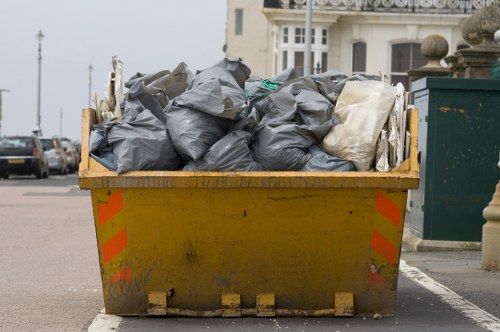 Business Waste Removal Blackheath is committed to creating an eco-friendly waste disposal area and a genuinely sustainable rubbish area for commercial clients across Blackheath and neighbouring boroughs. Our approach combines practical on-street collection with proactive reuse and recycling programs, designed to lower carbon footprints while improving resource recovery. We support local businesses in meeting municipal recycling targets and adopting best practice waste separation in line with borough guidance.
Our services for commercial waste in Blackheath focus on segregation at source, clear labelling and staff training. We work with local councils' approaches to waste separation — for example, collection of dry recyclables, food waste, and residual waste streams in line with Greenwich and Lewisham policies — and tailor our routes to match the boroughs' schedules to maximise diversion from landfill. Blackheath business waste removal is therefore not just about collection; it is about waste prevention, reuse and recovery.

Targets and measurable goals
We have set a clear recycling percentage target: our objective is to divert and recycle 70% of collected business material by 2028. This target applies to materials collected from retail, hospitality, offices and light industrial clients, creating a measurable shift towards a low-waste local economy. To hit this goal we track tonnages per client, report on reuse and recycling rates monthly, and prioritise routes and handling that maximise recovery.
Local transfer stations and material recovery
Collections from Blackheath businesses are processed through a network of local transfer stations and materials recovery facilities (MRFs). We partner with nearby transfer stations — including borough facilities and regional hubs serving Greenwich and south-east London — to ensure fast turnaround, efficient sorting and reduced haul distances. Using closer transfer points reduces vehicle miles, fuel use and associated emissions, supporting a true eco-friendly waste disposal area strategy.
 Working with transfer stations also enables better separation of construction and demolition waste, cardboard and paper bales, glass, metals and organic streams. Where possible we route specific streams directly to specialist processors (e.g., food waste to anaerobic digestion, mixed plastics to advanced reprocessing), increasing the proportion of material that is truly recycled rather than downcycled or landfilled.
Partnerships with charities and reuse networks are at the heart of turning commercial disposals into community benefits. We collaborate with local charities and reuse organisations to rescue furniture, equipment and gently used stock from businesses before they enter the residual waste stream. Our charity partners include reuse-focused groups operating in south-east London and surrounding boroughs, which find new homes for items and support local people in need.
These partnerships help create a circular economy in Blackheath: donations are collected separately, items assessed for resale or refurbishment, and materials that cannot be reused are diverted to appropriate recycling channels. Through these routes we extend the life of goods and reduce the embodied carbon that would otherwise result from disposal and replacement.
To support clients who want more structured reuse options we offer periodic collections for bulk donations and provide documentation showing diversion rates and the estimated carbon savings achieved through charity redistribution and reuse.
Low-carbon vans and sustainable logistics
Our transport fleet is being decarbonised: we operate a growing number of low-carbon vans, including fully electric vehicles and plug-in hybrids suited to urban collections. Where electric vehicles are not feasible for heavier loads, we use Euro 6+ engines and route-optimisation software to minimise mileage. This investment in cleaner vehicles reduces emissions in the neighbourhoods we serve and helps create a genuinely sustainable rubbish area for businesses.
Route optimisation, payload maximisation and regular vehicle maintenance further lower emissions and operational energy use. We also schedule multi-stop pickups to serve clusters of Blackheath businesses in a single journey, reducing repeated trips and keeping our carbon intensity per tonne of waste collected as low as possible.
Streams we prioritise
We focus on diverting high-value and high-impact streams that have the greatest environmental benefit when recycled. These include:
- Paper, cardboard and packaging — consolidated baling and direct delivery to MRFs;
- Food waste — separate collections for anaerobic digestion or composting;
- Glass and metals — segregated collection for recycling back into manufacturing;
- WEEE and electronics — secure collection routes linked to accredited reprocessors;
- Furniture and large-items — targeted reuse and charity redistribution.
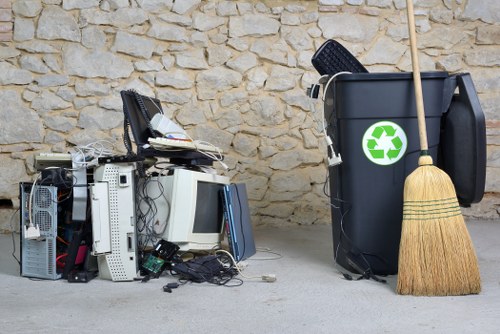 Sustainable procurement and client engagement are complementary to collection and processing. We advise businesses on reducing packaging, choosing recyclable materials and managing stock to avoid waste. By combining procurement advice with reliable collection and charity partnerships, clients strengthen their sustainability profiles while reducing disposal costs.
 Reporting and transparency are provided through clear material flow statements and monthly recycling reports. These show tonnages collected, percentages diverted, the estimated carbon savings from reuse and recycling, and progress toward the 70% recycling target. Transparent metrics help businesses demonstrate compliance with local policies and make informed decisions to create a greener, more resilient operation in Blackheath.
In summary, our approach to business waste removal in Blackheath is built around measurable recycling targets, close work with local transfer stations, partnerships with charities to enable reuse, and a low-carbon fleet. Together, these elements create an eco-friendly waste disposal area and a functional, pragmatic sustainable rubbish area for the whole business community.
